
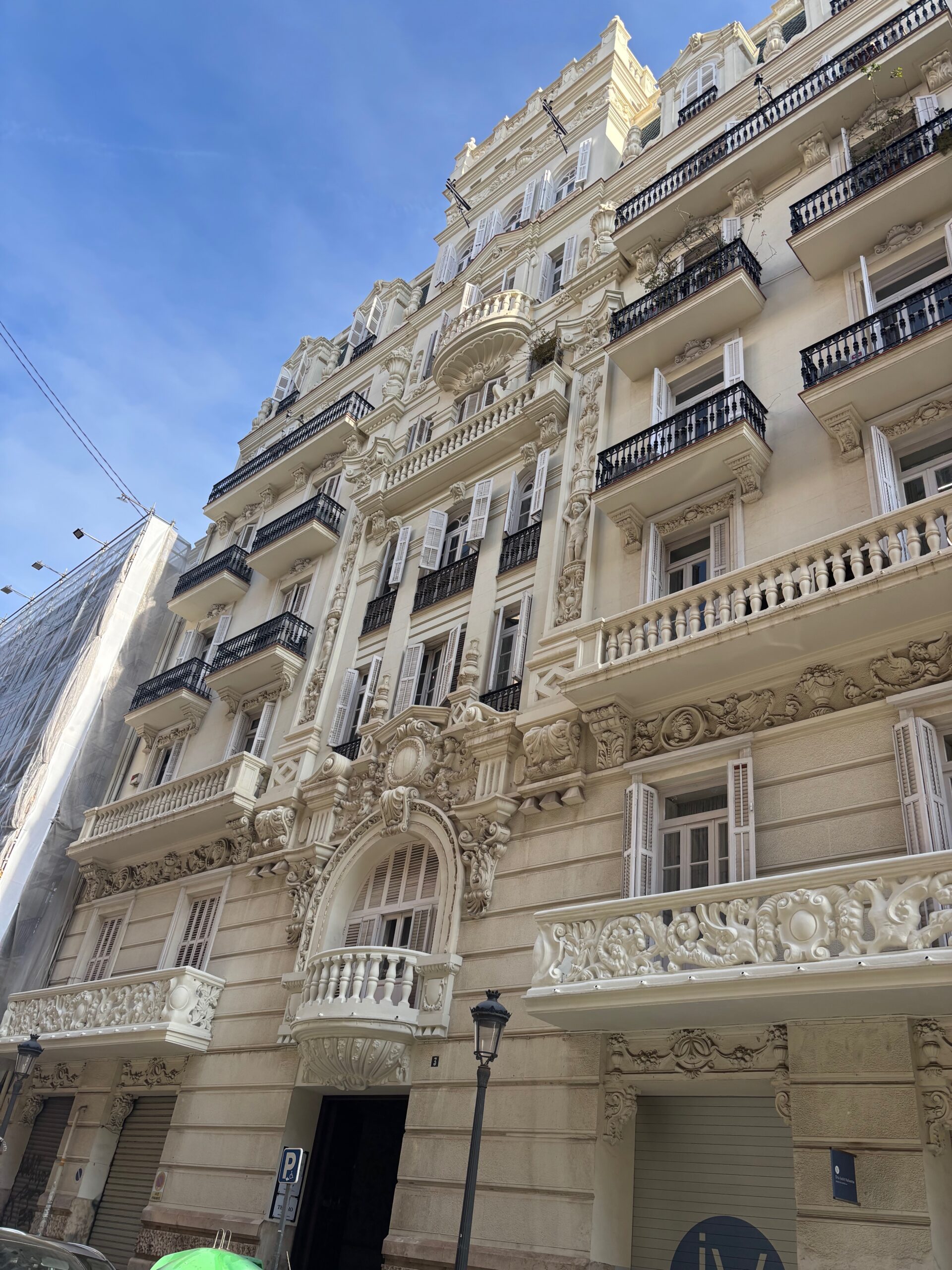
(My wife and I spent six weeks in Valencia, Spain in the winter of 2026. We worked four days a week and explored on the weekends. This post is about my initial impressions of the city.)
Valencia – is the third-largest city in Spain, and it seems daunting to get a sense of the historic district because it is so large. It almost feels like we are living in a huge ice cream store, and we’ll only be able to sample a handful of the hundreds of flavors during the six weeks we are here. Some initial, mostly superficial, observations.
Graffiti – It is everywhere. At first, it might seem distasteful or offensive, but eventually, you stop seeing it. It’s not hard to imagine some locals preferring graffiti to a bland painted wall. Our neighborhood is known for its “street art,” which is also done with spray paint, but the results are usually whimsical and funny.
Baby, It’s Cold Outside – Well, that’s relative. If you are a Valencian, you might head out each morning in January with a down coat, hat, scarf, and gloves. However, if you just came from Massachusetts, where we had three snowfalls recently, you might head out with a light sweater or just long sleeves because that’s all you need in the low 50’s and very bright sunshine.
Cleanliness is next to Godliness – Or something, because you have to look hard to find a piece of trash here in the historic district (this applies to most cities in Europe and is the complete opposite of NYC). What you don’t have to look hard for is the reason why. Swarms of street cleaners with all sorts of equipment. The city employees with two trash cans on a push cart and a broom always catch my eye. But many citizens do their part. Our neighbor not only sweeps the old, discolored public sidewalk in front of his apartment, but will occasionally mop it, even when there is no visible trash or dirt.
The Older The Better – The historic quarter of Valencia, where Spanish and foreign tourists tend to congregate, has so many beautiful old buildings that you can suffer whiplash trying to take them all in. Perhaps the people who built them reasoned that they, their friends, and family would walk by their building for years, so they made them pleasing to the eye.
Then, at some point in the 1900s, something changed: the people responsible for building weren’t willing to invest the money needed to make them appealing. Maybe aesthetics weren’t so important when you whizzed by in a car, rather than strolled by. You can see this transformation in most cities around the world, but here it is more striking because of the density of the beautiful older buildings.
Rise and shine! – But not too early. Sunrise wasn’t until 8:15 today, and except for kids walking to school, you don’t see much street activity till late in the morning. There are a number of gyms in the area, but most don’t open until 10 AM, so getting a workout in before work isn’t a thing here. (Spain should be in the same time zone as the UK, but Franco wanted Spain to be in the same time zone as the continent, and they have never gotten around to changing it back. That is why the sunrise is so late here.)
9 PM. Time for dinner! – It’s not clear how common siestas are here, but it is apparent that people don’t eat dinner till 8 or 9 PM, but you knew this already. The first two winters we spent in Spain, we’d eat dinner at this time and found it surprisingly easy to adjust to. This year, we are mostly skipping dinner since we tend to skip dinner back home.
Chariots of Fire! – There is a public elementary school behind our apartment that our bedroom overlooks. The children are allowed two long recesses each day, and when they are over, they don’t ring a bell. Instead, they blast a song over loudspeakers (perhaps some of the children are hard of hearing because it is really loud). Often, the song is the theme song to Chariots of Fire, which makes us smile.
Making a buck – Or a Euro, as the case may be. In front of our apartment is a small children’s playground with a single bench. While children rarely play there, we often see a young man giving haircuts. I went over for a cut and learned the young men who congregate there are from various Arabic countries. Most of them were looking for work. The barber charged $8, and that was his sole income. They probably could tell by my looks that I wasn’t Spanish, but they had no way of knowing whether I was American or European (even most Spanish people can’t tell where we are from until we tell them). It was one of the few times I have felt so openly disliked. It was an odd, but not threatening, feeling.
At the time, I took it personally, but in retrospect, it seems their anger had nothing to do with me and everything to do with the cards life dealt them. We have visited with a handful of servers at various restaurants who were from Central and South America. They all commented on how welcoming the Spanish people have been, which might be due to a shared language (and a sense of guilt over historic wrongs?)
I didn’t see these young men smile or laugh, but they seemed obsessed with cigarettes. When asked why they smoke, they said something about the stress of living in an unwelcoming society. Imagine being young and wanting to move ahead in life, but not being able to ike out a living in your home country, so you gather up enough gumption to leave home, only to find it equally difficult in the new country. Worse, you quickly get a sense that you are not welcome.
Overall impression – Valencia is a wonderful city to visit. Don’t worry if you don’t speak Spanish, as enough people speak English that it won’t be an issue. One thing to keep in mind, though, is that all of Spain is quite toasty in the summer, so you might consider scheduling your visit when the weather is cooler, the prices are lower, and there are fewer tourists.
